
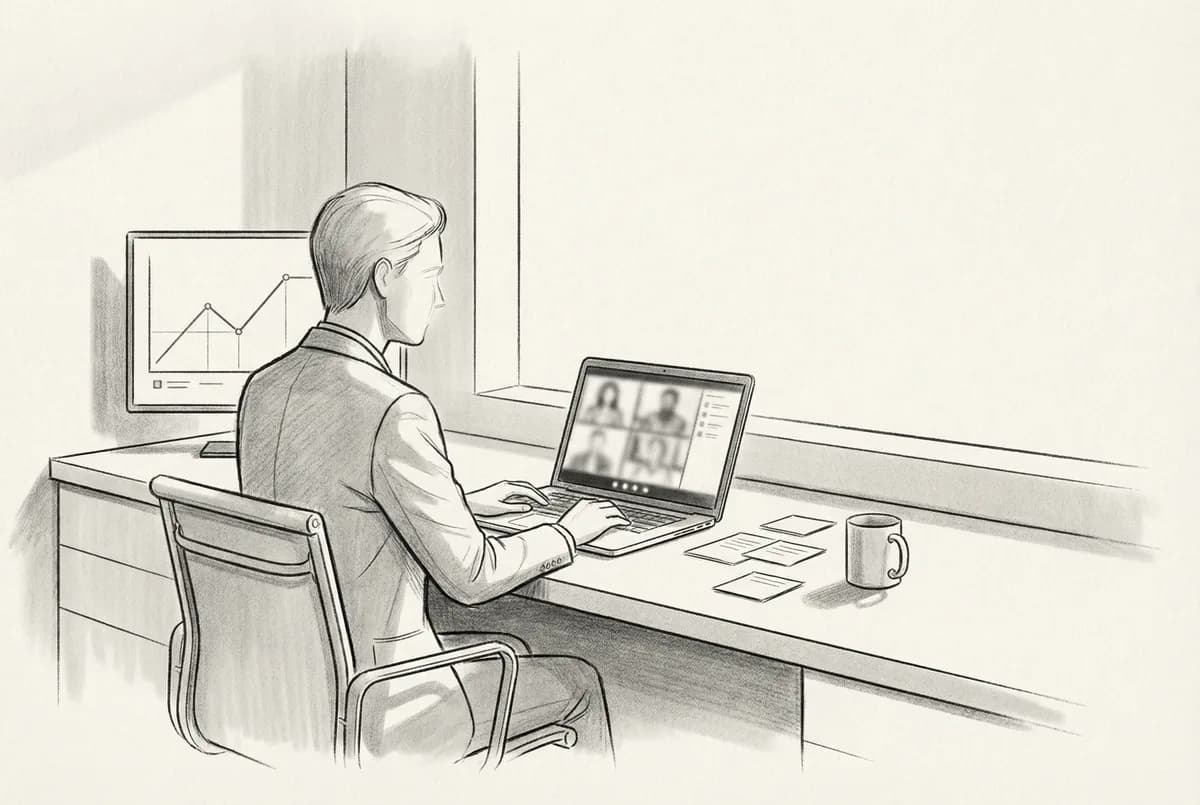
There is a common assumption that virtual medicine is impersonal. A screen instead of a handshake. Pixels instead of presence.
I understand the instinct. But during my training and early career, practicing across both in-person and virtual primary care settings, I found the opposite to be true.
When done correctly, virtual care does not reduce the relationship. It deepens it.
The Real Barrier to Good Primary Care
For most people, the problem with primary care is not quality. It is friction.
The 45-minute commute. The waiting room. The half-day blocked for a 12-minute visit. The slow realization that seeing your doctor requires so much effort that you only do it when something is already wrong.
Friction delays follow-up. Delayed follow-up breaks continuity. Broken continuity means your physician is always working from a snapshot instead of a full picture.
The issue is not that people do not value their health.
The issue is that the system makes consistent engagement unreasonably hard.
What Changes When Access Is Easy
When I can see a patient virtually within days instead of weeks, something shifts.
They reach out earlier. Not just when symptoms are severe, but when something feels slightly off. When sleep has been disrupted for a week. When stress is affecting their body in ways they cannot name. When they notice a change and want to talk it through before it becomes a problem.
This is not convenience medicine. This is medicine the way it should work.
Frequency builds context. Context builds trust. Trust builds honesty. Honesty builds accuracy.
That sequence matters more than whether we are in the same room.
A Different Kind of Visit
I had a patient message me on a Thursday evening. She had been having headaches for a few days. Not the worst of her life, but persistent in a way that felt unfamiliar.
In a typical insurance-based model, she probably would have waited. Taken ibuprofen. Hoped it passed. Maybe gone to urgent care if it got bad enough, where a provider with no context would have started from zero.
Instead, we talked for ten minutes that night. I knew her history. I knew she had been under significant stress at work. I knew her blood pressure had been creeping up over the past year.
We adjusted her management. The headaches resolved. No urgent care. No ER. No unnecessary imaging. Just continuity doing what it is supposed to do. If her history had suggested any clinical red flag, the appropriate next step would have been in-person evaluation or the emergency department.
What Virtual Care Is Not
I am not arguing that virtual medicine replaces all in-person care. Some things require hands-on examination. Some diagnoses need imaging, labs, or procedures.
But the majority of primary care is not procedural. It is conversational. It is pattern recognition. It is listening carefully, asking the right questions, and knowing what to do with the answers.
Virtual care fails when it replaces judgment. It succeeds when it removes friction around it.
The danger is not the screen. The danger is care without memory, without context, without someone who knows your story and can interpret new information against everything that came before.
Why the Physician Still Matters
Virtual care has expanded access. That is a good thing. But it has also flooded the market with episodic, transactional encounters that feel like customer service, not medicine.
The differentiator is not technology. It is who is on the other side.
A physician trained to manage uncertainty. To hold broad differentials even when symptoms are vague. To treat when appropriate and refer when necessary, but not reflexively. To integrate mental, metabolic, and lifestyle factors rather than siloing each into a separate specialty visit.
That kind of thinking does not come from an algorithm or a protocol. It comes from years of training and accumulated clinical judgment.
When that is present, virtual care becomes an amplifier. When it is absent, virtual care becomes a vending machine.
What This Looks Like in Practice
The best care I have delivered combines:
- Continuity over time
- Physician-level clinical reasoning
- Reduced friction through virtual access
- Responsiveness that matches how people actually live
Primary care should not feel rushed, reactive, or transactional. It should feel steady, contextual, and responsive.
If you have been settling for less, you do not have to.